

If you’ve been to the doctor lately, you’ve probably noticed some changes in the way offices and appointments are managed. These days, it seems artificial intelligence is everywhere, from medical offices and clinics to pharmacies and hospitals, streamlining the whole healthcare industry.
How AI is revolutionizing modern medicine
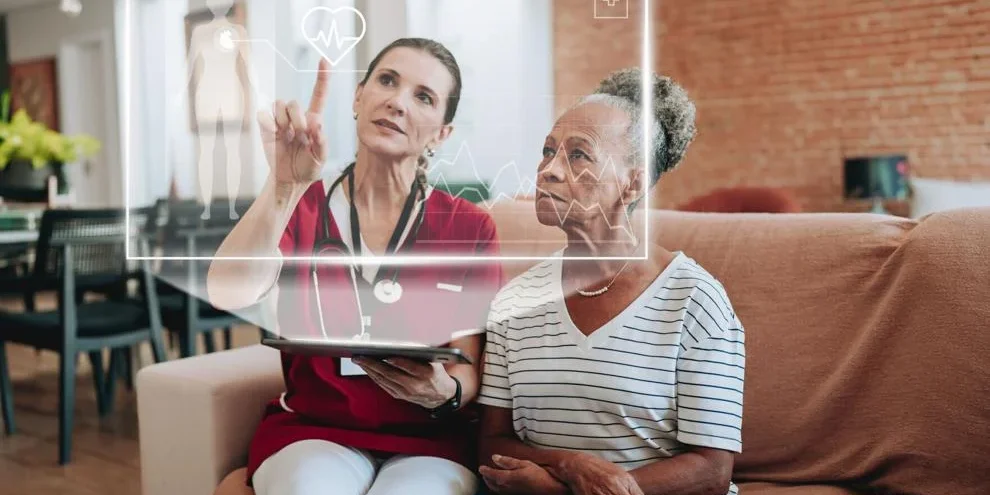
With countless applications across all fields, AI utilizes a collection of specialized technological systems to do the same work humans do, but often much faster and more efficiently. When a medical diagnosis is on the line, doesn’t everyone want to receive their results as quickly as possible?
These are just a few of the ways AI improves how we access healthcare information and the delivery of modern medical services.
No more waiting around for a call
Online charting platforms now post patients’ test results almost instantaneously. AI also allows providers to use technology to generate replies to patient messages and to quickly answer their questions without ever picking up the phone.
Saving time with AI algorithms
By analyzing MRIs, CTs and X-rays, AI algorithms or chatbots can support the interpretation of images and scans, helping doctors make highly accurate diagnoses for their patients. In the hospital setting, testing and retesting can be costly for both the facility and the patient. Getting the correct diagnosis more quickly saves everyone time, money and stress.
Allowing AI to complete administrative work
AI administrative functions like transcription services make it much easier for doctors, nurses and medical staff to enter notes and edit information in patient records. The advent of AI has also played a role in the increasing popularity and convenience of online scheduling and virtual appointment options.
AI research
AI can sort through a staggering amount of research documents, catalogues, publications and resources that would take a human reader much longer to sift through, helping users quickly get their hands on the information they’re looking for. All you need is a mobile device and a wireless signal to access info from any location around the world.
Does AI sound too good to be true?
Let’s keep in mind a few limitations. The expansion of AI technology in the healthcare arena may cost some jobs as computers take over tasks previously performed by employees. (On the flip side, AI may also create new job opportunities for those who are interested in developing, managing and supporting new technologies.) And let’s not forget that computers do make occasional errors. Even with safety measures in place, there’s still the possibility of tech issues and data breaches.
Ideally, AI technology can work as a complement to human collaboration in best-case scenarios. Especially in sensitive medical cases and when you’re just not feeling well, nothing replaces the human touch of an empathetic face-to-face meeting with your medical provider. And AI can’t give you a sticker or a lollipop at the end of your visit!